
PCB and devices
Locate SoC, memory and power-device contact areas. Include package heights, board supports, TIM compression limits and allowable contact force.
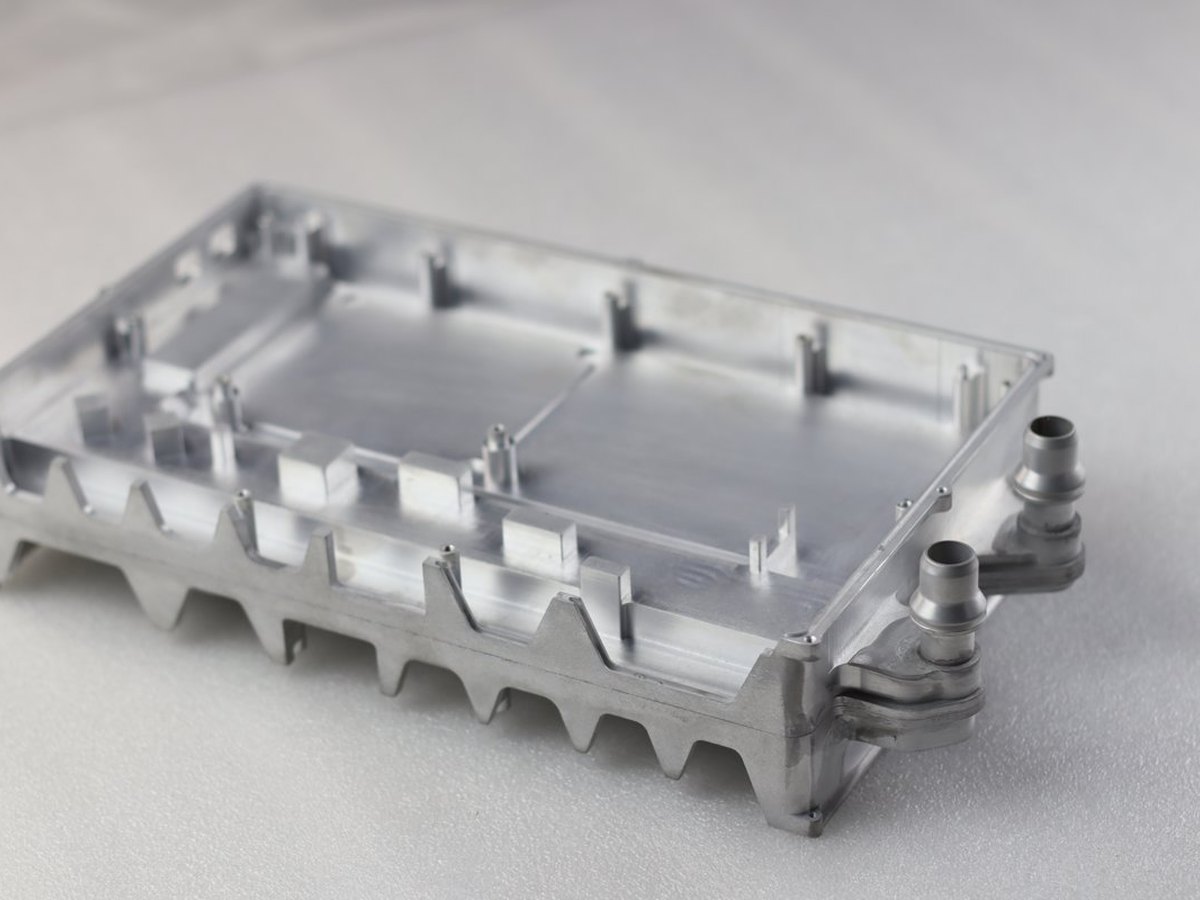
Review the ECU enclosure, contact pads and coolant connections as one mechanical assembly. This page supports custom housing and cold-plate enquiries from vehicle and autonomous-system development teams in Australia and New Zealand.
Custom component supply. Configuration and acceptance criteria are agreed against your drawing.
The PCB and enclosure drawings, component losses, contact-height stack and vehicle coolant-loop conditions. Housing supply and complete ECU qualification are different scopes: assign responsibility for thermal, leak, vibration, ingress and electrical acceptance before releasing the design.
Locate SoC, memory and power-device contact areas. Include package heights, board supports, TIM compression limits and allowable contact force.
Define coolant composition, inlet temperature range, available flow, pressure-drop budget, operating pressure and surge conditions.
Provide mounting points, connector keep-outs, port orientation, hose loads, lid access and space needed to assemble or service the unit.
Conceptual interface map, not a drawing of the pictured housing or a released coolant circuit.
A processor burst and a sustained compute load can produce different temperature peaks. Provide the time-dependent power profile, initial conditions and temperature limits. Evaluate the actual coolant mixture over the required temperature range; pressure drop measured with water at one temperature is not a universal vehicle-loop value.
For Australian and New Zealand development programmes, describe the real duty: for example an on-road enclosure, an off-highway machine or a stationary autonomous system. Ambient exposure, vibration and service conditions should follow that application, not a blanket regional rating.
| Check | Define in the test plan | Responsibility to agree |
|---|---|---|
| Thermal performance | Load profile, coolant mixture, inlet conditions, measurement points and allowable temperatures. | Housing supplier test fixture versus complete ECU thermal validation. |
| Pressure and leakage | Operating, proof and surge limits; test medium, duration, temperature and permitted leakage. | Supplied coolant boundary, plugs and connectors included in the test. |
| Mechanical and environmental | Mounting restraint, hose loads, vibration, thermal cycling and corrosion exposure. | Component testing versus the installed vehicle assembly. |
| Ingress and electrical integration | Lid seal, vent, connector sealing, grounding and EMC interfaces. | Final enclosure or ECU acceptance; no IP or EMC rating is claimed here. |
Machined prototypes and cast production housings can differ in material, wall thickness, flatness, porosity and local machining allowance. Select the route after DFM review, then agree which dimensional, sealing and thermal checks must be repeated. Do not transfer prototype results to a changed production design without assessment.
Send the housing STEP file, dimensioned drawing, PCB stack and coolant specification. The proposed release package should include the drawing revision, material and joining definition, seal and port interfaces, cleanliness requirement and the agreed inspection/test records.
No verified model-specific performance datasheet is available for this custom reference. Request a drawing review and agree the technical document package for your configuration.
Request drawing and document scopeConstruction reference: ToneCooling European product page. Photographs show reference constructions, not a validated configuration for your project. Numerical performance will only be stated with its source and test conditions.
Identify the items to be supplied: housing, cover, cold plate, seals, plugs or connectors. Vehicle plumbing, electronics, control software and complete ECU or vehicle qualification must be separately assigned. No automotive platform approval is implied by this reference.
Prepare my enquiry by emailOpens an editable email checklist; nothing is sent automatically. Attach your drawings before sending. NDA arrangements can be agreed before you share confidential files.
ToneCooling Australia Pty Ltd coordinates Australian and New Zealand enquiries; manufacturing is in Huizhou, Guangdong, China. Include the destination postcode and required delivery date. Currency, freight, lead time and included inspection documents are confirmed in the quotation.
No. The photograph shows an enclosure reference. Internal routing and the joining or sealing process require the controlled drawing; no unrelated channel photograph is used as proof.
No. Coolant leakage and enclosure ingress are different test boundaries. Define the coolant circuit test separately from any dust or water ingress test of the complete enclosure.
Only if the requirement establishes that flow throughout the relevant operating range. Pump control, parallel branches, coolant viscosity and fault conditions can change the available flow.