
Climate and heat rejection
Dry cooler selection uses the site design ambient, fluid circuit and installation layout. Hot-climate sites may need larger coils or adiabatic assistance.
Data centre liquid cooling equipment · Australia & New Zealand
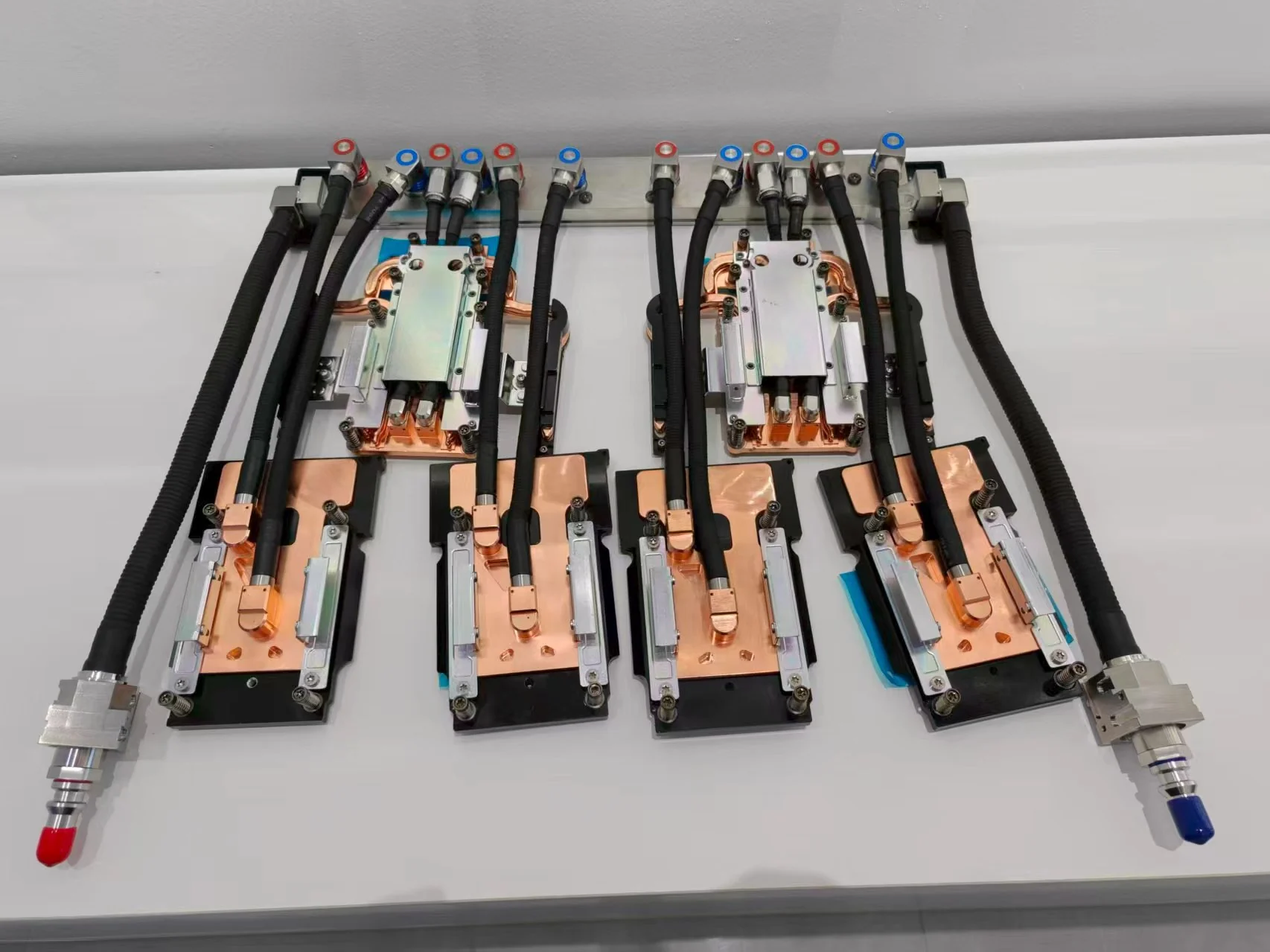
Data centre liquid cooling removes heat from CPUs and GPUs with a circulating coolant instead of room air, which is what lets AI racks run at 80–120 kW+ where air cooling is typically limited to 8–25 kW. ToneCooling Australia supplies the equipment stack for Australian and New Zealand projects: direct-to-chip cold plates, rack manifolds and quick disconnects, loop assemblies, coolant distribution units (CDUs) and dry coolers for heat rejection. Cold plates are designed, engineered and manufactured at our own manufacturing facility in Huizhou; selection, documentation and quotations are handled from Carlton, VIC.
Definition
| Cooling architecture | Typical rack density | Main limit | Choose it when |
|---|---|---|---|
| Air (hot aisle / cold aisle) | 8–15 kW | Airflow and room air-conditioning capacity | General-purpose servers and legacy halls |
| Air + rear-door heat exchanger | 15–25 kW | Coil capacity and facility water supply | Mid-density racks in an air-cooled hall |
| Direct-to-chip liquid (entry) | 25–60 kW | Cold plate pressure-drop budget and CDU pump curve | Mixed GPU / CPU clusters and HPC |
| Direct-to-chip liquid (high density) | 80–120 kW+ | CDU capacity and heat rejection to the facility loop | GB200 / GB300-class AI racks and training clusters |
| Immersion (single- or two-phase) | 100–200 kW+ | Dielectric fluid handling, server compatibility, capex | Specialty HPC where servers are qualified for immersion |
Equipment stack
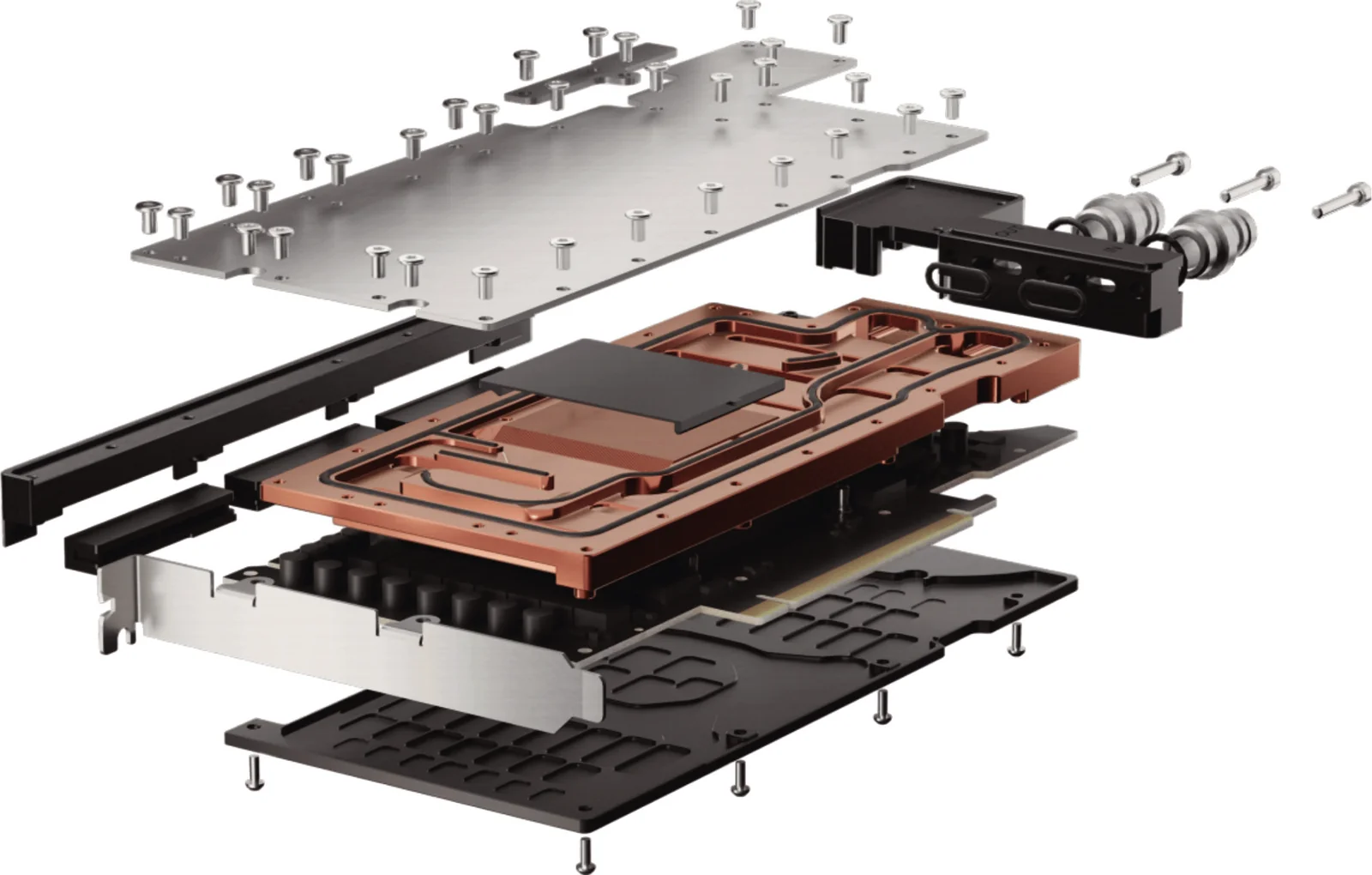
GPU and CPU cold plates, including GB300, GB200, H200 and H100-class standard parts and custom designs for other platforms.

Custom rack and chassis manifolds sized for branch flow, port geometry and wetted materials, with dry-break quick disconnects.

Pre-assembled server loops that connect cold plates to the manifold, pressure tested before shipment.
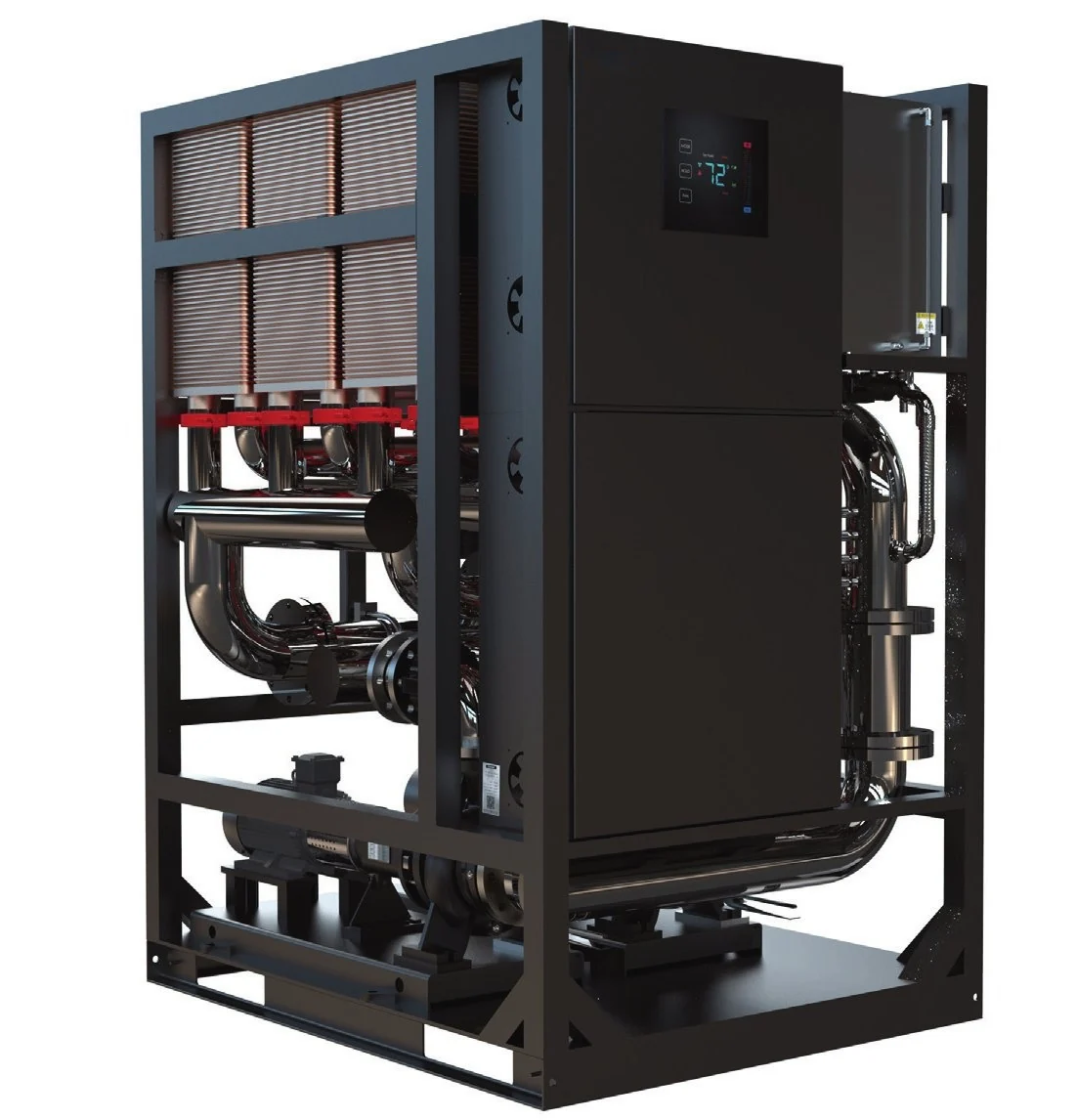
In-rack CDUs from 35 to 250 kW and in-row CDUs from 300 to 2,000 kW, with model PDFs for each family.
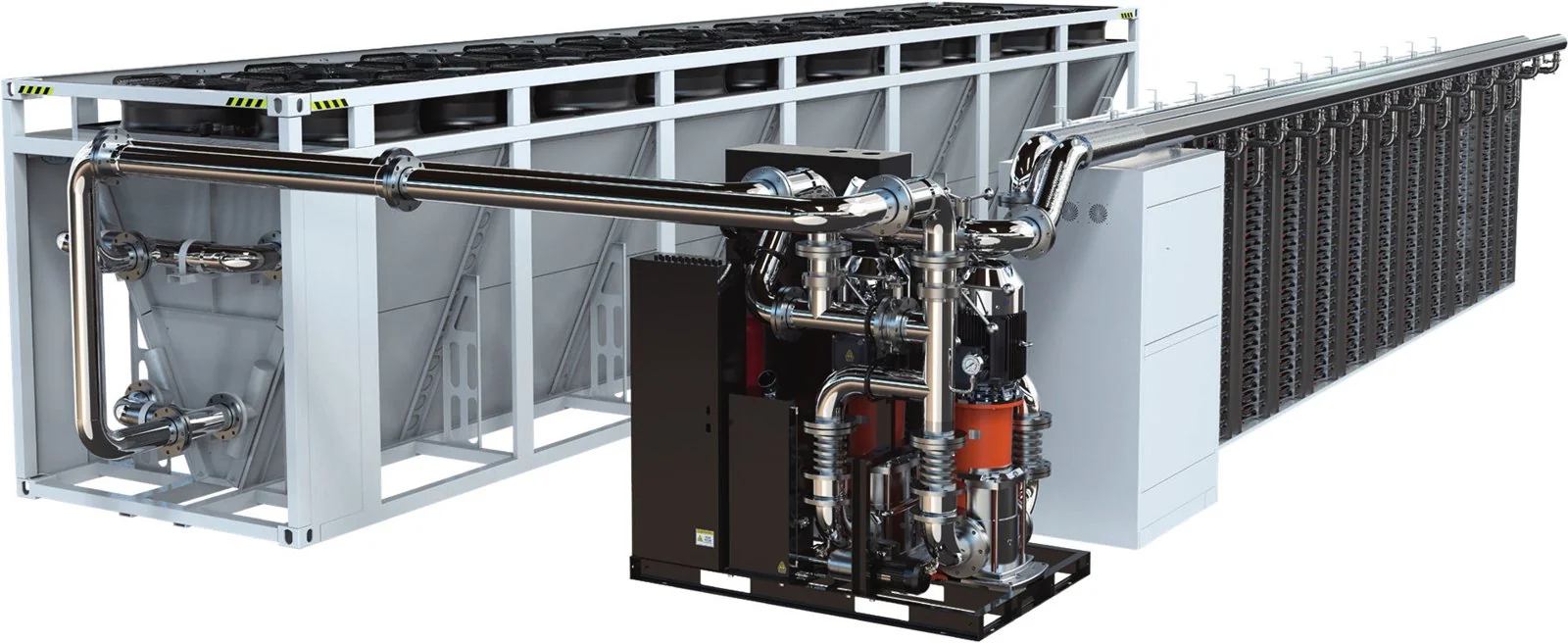
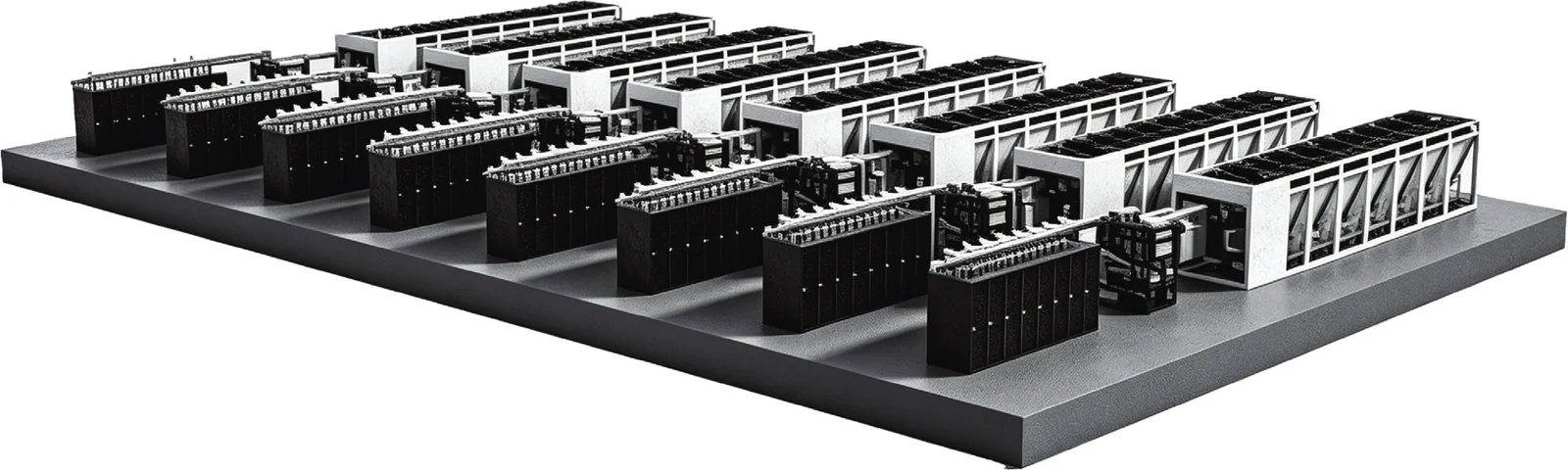
Outdoor heat rejection selected for the site climate, fluid circuit and available space.

Pressure, helium leak and flow checks, plus thermal cycling validation for cold plates, with lot traceability per shipment.
Selection
| Question | Direct-to-chip (cold plate) | Immersion |
|---|---|---|
| Server hardware | Standard rack servers with cold plates fitted | Servers qualified for submersion in dielectric fluid |
| Hall layout | Standard racks and aisles; CDU in rack or in row | Horizontal tanks; higher floor loading |
| Heat captured by liquid | Processors and accelerators; air removes the rest | Close to all server heat |
| Coolant | Treated water or propylene glycol mix (for example PG25) | Single- or two-phase dielectric fluid |
| Servicing | Quick disconnects let a tray be removed without draining the loop | Servers are lifted out of the fluid |
| Retrofit into an existing hall | Usually practical with in-rack or in-row CDUs | Usually needs a dedicated area |
More detail: liquid vs air cooling for Australian data centres.
Coolant

Local conditions
Dry cooler selection uses the site design ambient, fluid circuit and installation layout. Hot-climate sites may need larger coils or adiabatic assistance.
Closed-loop liquid cooling with dry coolers can cut evaporative water use. See data centre water use in Australia.
CDUs and dry coolers are configured for 230 V or 400 V, 50 Hz supplies. The electrical safety compliance pathway is confirmed per project at quotation.
Datasheets, test records and documentation for AS/NZS-scope reviews are handed over per shipment. See AS/NZS compliance support.
Cold plate, manifold, hoses and CDU heat exchanger share one rack-level pressure-drop envelope, typically 25–45 kPa. See the loop pressure-drop RFQ guide.
New Zealand enquiries are handled by ToneCooling Australia Pty Ltd. See liquid cooling for New Zealand.
Risks

By location
Sources and standards referenced: ASHRAE TC 9.9 (data centre thermal guidelines); Open Compute Project cooling environments; Standards Australia (AS/NZS standards). Specifications on this page come from ToneCooling datasheets and model pages; project values are confirmed at quotation.
Not every data centre does. Air cooling is still practical for racks up to roughly 15–25 kW. Racks of current AI accelerators run at 80–120 kW+, which needs direct-to-chip liquid cooling because air cannot carry that much heat out of the rack.
Direct-to-chip systems use treated water or a propylene glycol mix such as PG25 in the secondary loop, and water or glycol in the facility loop. Immersion systems use dielectric fluids.
Higher upfront cost, leak risk inside the rack, coolant maintenance and the need for trained staff. Dry-break quick disconnects, pressure and helium leak testing, leak detection and a coolant maintenance plan manage these risks.
ToneCooling Australia Pty Ltd supplies cold plates, rack manifolds, quick disconnects, loop assemblies, CDUs and dry coolers for Australian and New Zealand projects, with engineering coordination from Carlton, VIC.
Direct-to-chip liquid cooling supports 80–120 kW+ per rack, compared with 8–25 kW for air cooling. The rack-level pressure-drop envelope across cold plates, manifold, hoses and CDU heat exchanger is typically 25–45 kPa.
Yes. Port size, flow rate, pressure-drop budget and coolant chemistry are matched to the specified CDU during the DFM engineering review, before samples are made.
Cold plate samples typically take 4–6 weeks; CDU samples typically take 8–10 weeks. CDUs, dry coolers and other equipment are configured to order, with scope agreed per project. Everything is quoted per project; send an RFQ with your rack loads and site conditions.
Continue Exploring
Direct-to-chip cold plate kits for GB300, GB200, H200 and H100-class AI servers.
PRODUCTGB300-class standard cold plate, supplied to its datasheet.
PRODUCTGB200-class standard cold plate, supplied to its datasheet.
COMPARISONWhen AI data centres need direct-to-chip liquid cooling over air.
RESOURCEEngineering reference for direct-to-chip AI server cold plate design.
CHECKLISTWhat to send so a rack manifold can be quoted accurately.
Rack loads and TDP per platform, target flow and pressure drop, facility water temperature, the CDU you plan to use (or ask us to size one) and the site location. An engineer reviews every RFQ and replies by email with next steps.
Request a Quote