
Controlled configuration
Rack elevation, port schedule, BOM, mating parts, seal materials, mounting instructions and revision identifiers.
Turn a rack elevation and server schedule into a port map that suppliers can quote consistently. For Australian and New Zealand projects, identify the mechanical fit, connector halves, operating cases and site handover before fixing the manifold configuration.
Project preparation guidance. Examples are illustrative, not ToneCooling product ratings.
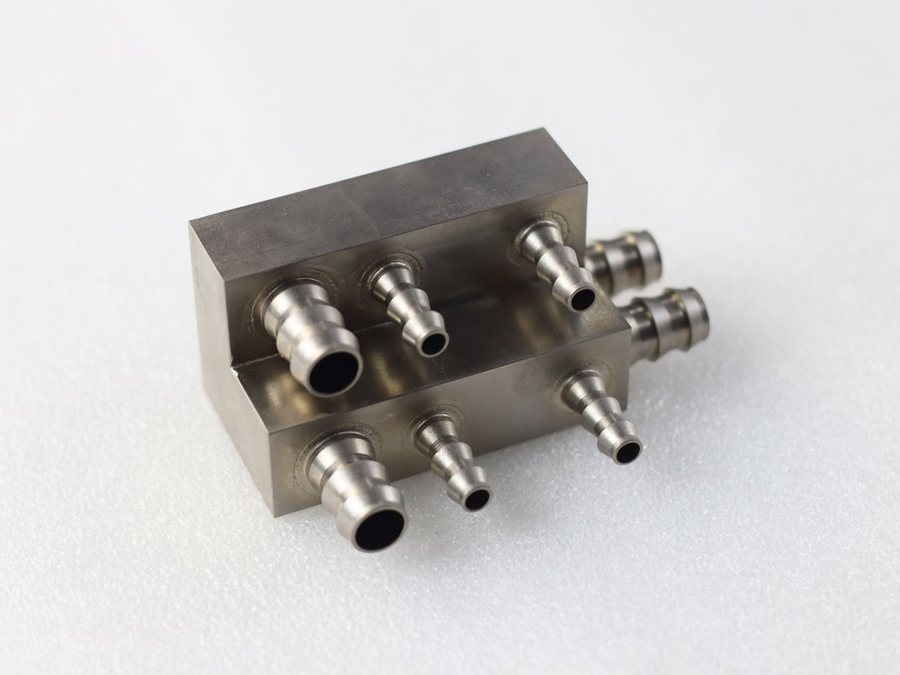
Provide a rack elevation, numbered supply/return port map, flow per active branch, coolant and pressure limits, plus the exact mating interfaces. State spare-port treatment, service access and the documents needed for factory and site acceptance. Port count alone does not define a compatible manifold.
| Interface group | Include in the RFQ | What must be checked |
|---|---|---|
| Rack envelope | Drawing revision, mounting rail position, rack height convention and keep-outs. | U and OU dimensions must not be treated as interchangeable. |
| Feed and return | Top / bottom / rear feed, main ports, hose path and isolation points. | Space for assembly, bend radius, valve operation and service access. |
| Server branches | Numbered port map, active / spare status, flow and mating connector halves. | Latch clearance, mating direction and installed reach. |
| Materials and seals | Complete wetted-material list, fluid chemistry and elastomer specification. | Compatibility of the whole supplied assembly at operating temperature. |
| Instrumentation | Pressure/temperature points, vents, drains and leak-detection boundary. | Who supplies sensors, wiring, monitoring and commissioning. |
For an illustrative rack with six servers and one supply plus one return connection per server, the pair of manifolds needs six supply and six return branch ports. Adding two complete spare branches brings the count to eight supply and eight return ports. Main feed, drain, vent and instrument connections are additional items.
Do not infer compatibility from a shared nominal bore, colour or “dry-break” description. Specify manufacturer, series, part numbers, seal option and termination. Obtain documented compatibility for any proposed substitution, including mating forces, disconnect conditions, spillage and air inclusion. Do not assume connectors can be operated under arbitrary pressure or flow.
Show how an engineer reaches each latch, isolates a branch and removes a server with neighbouring equipment installed. Confirm front/rear working space, rack-door clearance, hose support and labelling. A manifold that fits an empty rack may obstruct a fully populated service operation.
For an AU/NZ retrofit, record the existing rack drawing and CDU handover conditions rather than assuming a local standard layout. Agree flushing, transport cleanliness, capped connections, filling and venting responsibilities. Specify delivery postcode, available site support and requested spare connector sets in the commercial package. Local enquiries do not by themselves imply local stock or an installation crew.
Rack elevation, port schedule, BOM, mating parts, seal materials, mounting instructions and revision identifiers.
Agreed dimensional, cleanliness and leak-test records with the assembly boundary identified. Include branch-flow verification where specified.
Installation and isolation sequence, fill/vent procedure, maintenance limits and responsibilities for commissioning records and spares.
Use the companion hydraulic worksheet for the branch-flow calculation. A manifold pressure rating does not establish available flow at every server, and a factory leak test does not establish the rack’s complete operational performance.
These references support the selection method. They do not validate a ToneCooling configuration or establish interchangeability.
Product procurement entry; confirm the complete current supply scope in your quotation.
Use this companion guide to define the hydraulic boundary.
Source review: 21 September 2026. Use the selected component’s current controlled datasheet and drawing for procurement.
List supply/return manifolds, couplings, hoses, valves, sensors and brackets individually. CDU equipment and installation can be separately quoted; their inclusion is determined by the offer, not assumed from the word manifold.
Prepare my enquiry by emailOpens an editable email checklist; nothing is sent automatically. Attach your drawings before sending. NDA arrangements can be agreed before you share confidential files.
ToneCooling Australia Pty Ltd coordinates Australian and New Zealand enquiries; manufacturing is in Huizhou, Guangdong, China. Include the destination postcode and required delivery date. Currency, freight, lead time and included inspection documents are confirmed in the quotation.
Not by itself. Check whether the count refers to supply ports, return ports, all ports together or includes feed and auxiliary connections. Use a numbered port map.
Only with documented compatibility for the exact mating parts and agreed conditions. Nominal size alone is insufficient.
Yes. Define whether it is connected, blanked or protected, its permitted pressure state and the parts needed when the branch is commissioned.
Related liquid loop pages