
Last updated: 5 October 2026
Liquid-cooled load bank and commissioning equipment
A liquid-cooled load bank puts real heat into a liquid cooling loop so the CDU, controls and heat rejection can be proven before any server is installed. ToneCooling supplies the TC-DL-30 30 kW liquid-cooled load bank, the TC-FRC-100 fluid replenishment cart and 5-in-1 flushing, drying, vacuum, nitrogen charging and pressure-holding equipment for Australian data centre commissioning.
How is a liquid-cooled load bank used in commissioning?
A typical sequence for a cabinet or a row of racks, showing which tool covers each step.
Flush and dry
Remove debris, oils and moisture left by manufacturing and installation.
Vacuum and N₂ hold
Pull vacuum, charge nitrogen and hold pressure to prove the loop is leak-tight.
Fill and top up
Fill with coolant under constant pressure and bleed the air out.
Load test
Apply real heat before the servers arrive to prove the CDU and heat rejection.
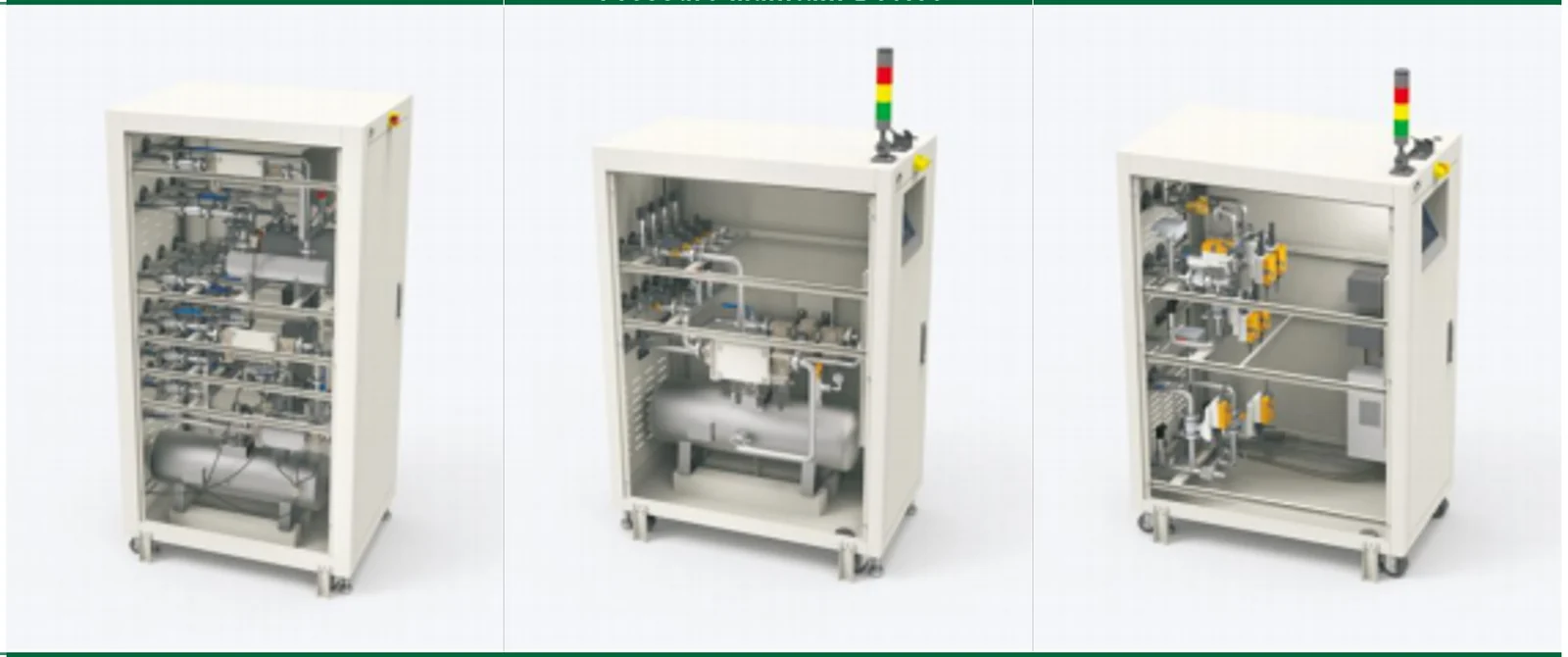
What service equipment is used to commission a liquid cooling loop?
The all-in-one machine runs up to four transition boxes at once. A transition box connects to one complete cabinet, and the pressure-holding device tests up to four devices in parallel. Water quality (pH, conductivity and turbidity) is measured as it runs.
| Parameter | TC-SVC-AIO | TC-SVC-PH | TC-SVC-TB |
|---|---|---|---|
| Power supply | 400 V, 50 Hz (to order) | 230 V, 50 Hz (to order) | |
| Size (with casters) | 800×800×2000 mm | 600×600×1750 mm | |
| Rated power | 12 kW | 0.5 kW | |
| Simultaneous devices | 4 transition boxes | 4 DUTs | 1 cabinet |
| Pressure holding | 0–0.7 MPa adjustable | — | |
| ΔP detection | Min. 0.1 kPa, configurable | — | |
| Water quality | pH, conductivity, turbidity | — | pH, conductivity, turbidity |
| Comms | RS485, RJ45 · Modbus TCP, Modbus RTU, JSON | ||
30 kW of real heat before the servers arrive
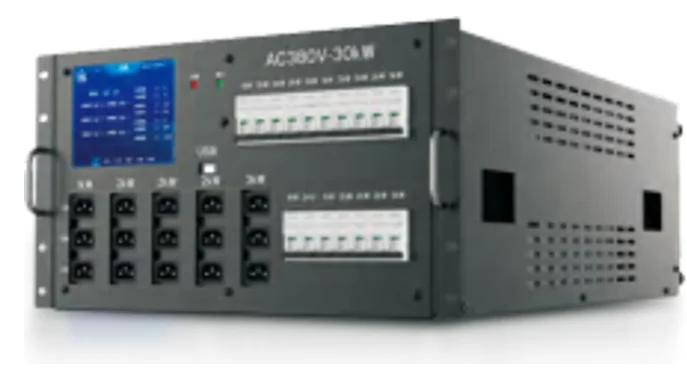
Multi-step loads simulate different server heat states and server flow resistance. It has an HMI, leak detection, and protection against water leakage, electrical leakage, over-temperature (80 °C alarm) and over-pressure.
| Rated heat | 30 kW |
| Power supply | 230 V, 1-ph, 50 Hz (to order) |
| Pressure rating | 10 bar |
| Air tightness | No leakage, 2 h at 1.2 MPa |
| Inlet fluid range | 5–75 °C |
| Size | 483 × 262 × 827 mm |
Constant-pressure filling and daily top-up
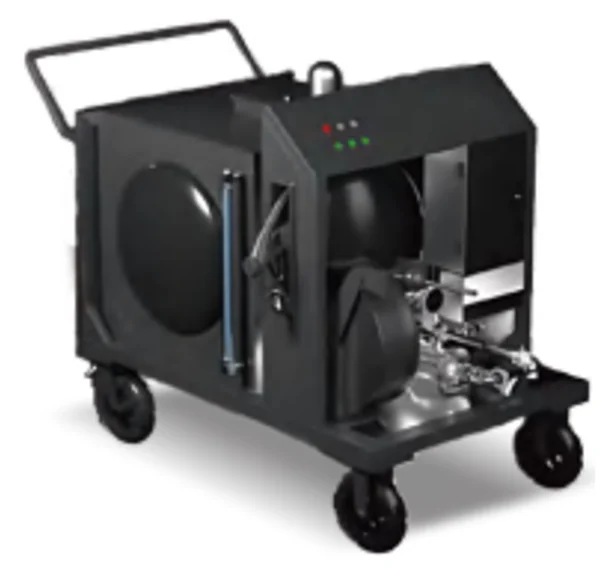
A 100 L mobile tank for high-flow initial filling and low-flow daily make-up. It has a flow switch, long-distance replenishment and caster wheels.
| Tank capacity | 100 L |
| Max refill flow | ≥ 50 L/min |
| Power supply | 230 V, 1-ph, 50 Hz, Australian plug (to order) · 450 W |
| Cable length | ≥ 10 m |
| Fluids | PG or EG solutions, water with additives |
| Filter | 100 mesh |
Commissioning equipment questions
Who uses this equipment?
Mechanical contractors, commissioning agents and data centre operators who build or maintain liquid cooling loops. Integrators also use it for factory acceptance testing of pre-built racks.
Why use a liquid-cooled load bank instead of the servers?
A dummy load proves the CDU, controls and heat rejection at full heat before you install expensive GPU servers. If something leaks or overheats, no server hardware is at risk.
Is the equipment suitable for Australian power?
Each unit is configured to order for Australian 230 V / 400 V, 50 Hz supply, with an Australian plug on plug-in equipment. The electrical safety compliance pathway for Australia and New Zealand is confirmed per project at quotation.
Where is the equipment supplied from?
ToneCooling supplies the equipment from China. ToneCooling Australia handles selection, AUD quotes, documentation, customs and after-sales.
What is load bank testing for liquid cooling?
Load bank testing applies a controlled heat load to the cooling loop and measures supply and return temperatures, flow and pressure, to prove the CDU and heat rejection perform at full load before handover.
Resistive or liquid-cooled load bank?
A resistive (air-cooled) load bank tests generators and electrical supply but puts its heat into the air. A liquid-cooled load bank puts its heat into the coolant loop, so it can test the liquid cooling system itself.
Plan your commissioning kit
Tell us the number of racks, loop volume and heat load. We'll recommend which tools you need and how many.
- Racks / loops to commission
- Loop volume (L)
- Heat load to prove (kW)
- Coolant type
Sources and standards referenced: ASHRAE TC 9.9 (data centre thermal guidelines); Open Compute Project cooling environments; Standards Australia (AS/NZS standards). Specifications on this page come from ToneCooling datasheets; project values are confirmed at quotation.