
TC-CDU-A60C
Download TC-CDU-A60C PDFFree PDF · no form required.
Assess the A60C for a floor-standing retrofit or development-room installation. Its listed envelope is 600 × 1200 × 2000 mm, with a 350 kg catalogue mass requiring a confirmed installation basis.
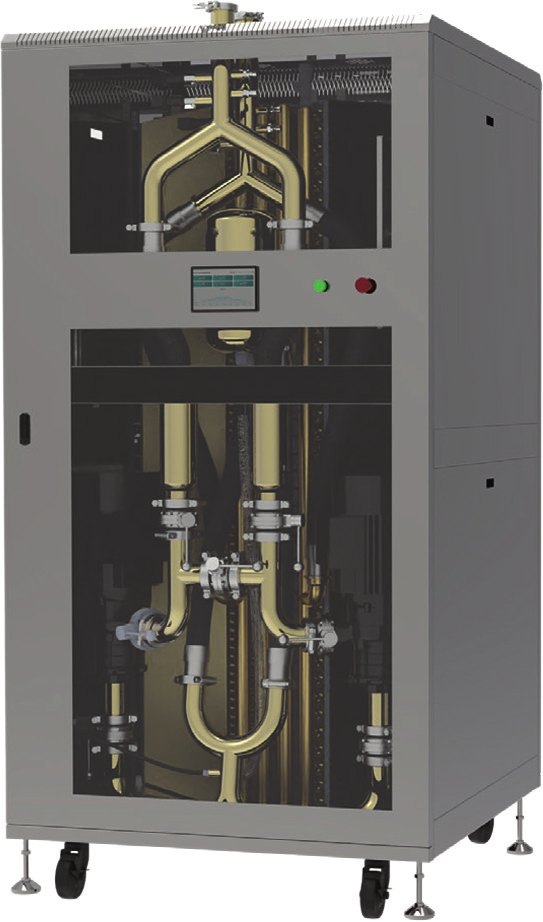
TC-CDU-A60C is a liquid-to-air cabinet CDU with a 60 kW catalogue capacity reference and 100 L/min flow reference. It sends liquid-loop heat into room air, so the proposed room cooling and air path must be assessed with the coolant operating point.
Free PDF · no form required.
| Parameter | Catalogue reference |
|---|---|
| Model | TC-CDU-A60C |
| Equipment type | In-Row Liquid-to-Air CDU |
| Catalogue capacity | 60 kW |
| Flow reference | 100 L/min |
| Flow adjustment range | 20–100% |
| Head reference — confirm at required flow | 25 m |
| Power consumption reference | < 3.5 kW |
| Catalogue electrical supply | AC 220 V, 50/60 Hz |
| External dimensions | 600 × 1200 × 2000 mm |
| Catalogue mass | 350 kg |
| Pump arrangement | 1+1 |
| Filtration reference | 25 μm |
| Condition | Reference / action |
|---|---|
| Air-side temperature pair — reference convention to confirm | 25 °C / 35 °C |
| Coolant temperature reference | 35 °C / 45 °C |
| Approach reference | 10 K |
Source: linked ToneCooling model datasheets. Catalogue values are references, not independently verified performance or a guarantee that every listed value applies at one simultaneous duty point. Confirm fluid, temperature, external pressure, electrical configuration, dimensions and mass basis in the accepted selection.
For a retrofit, identify the liquid heat that was previously rejected elsewhere and the room cooling capacity available when the proposed equipment is operating. Ask for the unit electrical input at that same point when building the room heat balance; the catalogue maximum power reference is not a measured operating trace.
The datasheet lists an air-side temperature pair of 25/35°C and coolant reference pair of 35/45°C. The air-side direction convention needs confirmation before using those values as an inlet/outlet schedule. Request an explicit selection at the air temperature expected at the cabinet intake.
| Selection item | Input or reference | Required confirmation |
|---|---|---|
| Heat rejection | 60 kW catalogue reference and stated air/coolant conditions. | Agree simultaneous duty and room heat removal. |
| Hydraulics | 100 L/min flow and 25 m head references. | Confirm external pressure at the actual fluid and flow. |
| Cabinet layout | 600 × 1200 × 2000 mm and 350 kg catalogue entries. | Confirm mass basis, fan access and unobstructed intake/discharge. |
| Operation | 25 μm filtration; less than 3.5 kW power reference. | Obtain service limits and actual operating electrical data. |
List the CDU or skid, connections, sensors, controls and accessories included in the offer. Allocate installation, water treatment, flushing, filling, electrical connection and commissioning to named project parties. Australian or New Zealand enquiry support does not imply local stock, on-site installation or an included service contract.
Request the controlled drawing, selected duty, component schedule and agreed factory test records. Confirm site electrical requirements and applicable conformity documentation for the offered configuration; a catalogue voltage or a pump arrangement is not proof of project compliance or redundancy.
Send the following conditions for a configuration-specific offer. Capacity, included equipment, documents, delivery terms and installation responsibilities must be confirmed in writing.
Prepare my enquiry by emailOpens an editable email checklist; nothing is sent automatically. Attach your drawings before sending. NDA arrangements can be agreed before you share confidential files.
ToneCooling Australia Pty Ltd coordinates Australian and New Zealand enquiries; manufacturing is in Huizhou, Guangdong, China. Include the destination postcode and required delivery date. Currency, freight, lead time and included inspection documents are confirmed in the quotation.
Not on that basis. Its heat enters the room air. The room must have an adequate assessed heat-rejection route for the intended operating conditions.
Other in-row liquid-to-air models
Data centre liquid cooling