
TC-CDU-L2000C
Download TC-CDU-L2000C PDFFree PDF · no form required.
Compare five floor-standing TC-CDU-L cabinet references for shared liquid-cooling infrastructure. Define the AU/NZ facility-water handover and the connected rack duties before choosing a cabinet size.
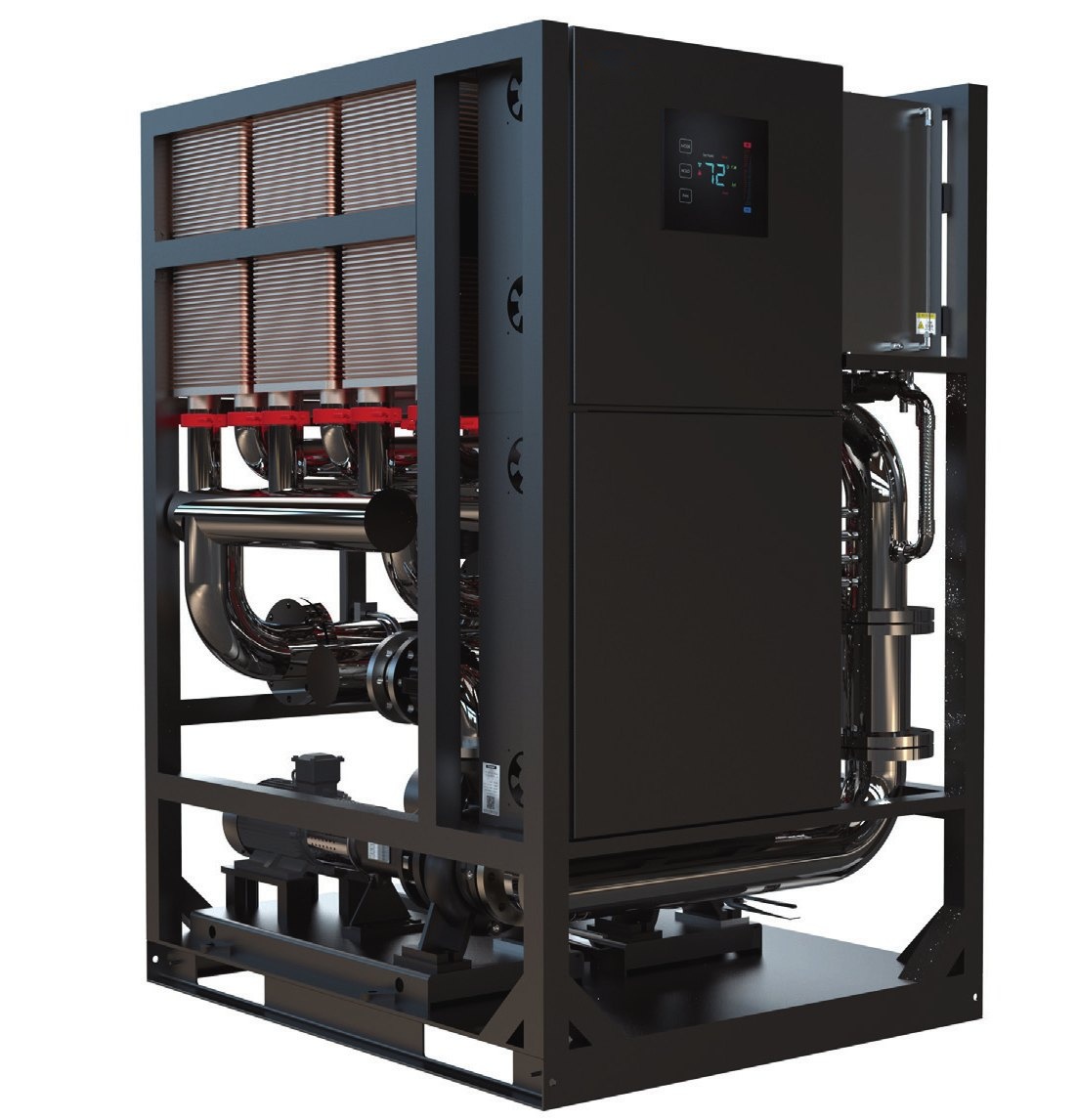
An in-row liquid-to-liquid CDU transfers heat from the technology cooling system to a separate facility-water circuit. It requires a suitable facility supply and a verified hydraulic duty on both sides; it is not an independent source of refrigeration.
Free PDF · no form required.
TC-CDU-L1600C specifications and selection
Download TC-CDU-L1600C PDFFree PDF · no form required.
Free PDF · no form required.
TC-CDU-L600C specifications and selection
Download TC-CDU-L600C PDFFree PDF · no form required.
TC-CDU-L300C specifications and selection
Download TC-CDU-L300C PDFFree PDF · no form required.
| Model | Catalogue load | Flow reference | Envelope |
|---|---|---|---|
| TC-CDU-L2000C | 2000 kW | 3200 L/min | 1200 × 1500 × 2200 mm |
| TC-CDU-L1600C | 1600 kW | 2500 L/min | 1200 × 1500 × 2000 mm |
| TC-CDU-L1000C | 1000 kW | 1800 L/min | 1200 × 1500 × 2000 mm |
| TC-CDU-L600C | 600 kW | 1000 L/min | 600 × 1200 × 2200 mm |
| TC-CDU-L300C | 300 kW | 500 L/min | 600 × 1200 × 2000 mm |
Source: linked ToneCooling model datasheets. Catalogue values are references, not independently verified performance or a guarantee that every listed value applies at one simultaneous duty point. Confirm fluid, temperature, external pressure, electrical configuration, dimensions and mass basis in the accepted selection.
Record facility-water availability through normal, degraded and maintenance modes. The selected heat exchanger must meet the technology-loop temperature target at the relevant facility inlet temperature, not only at the catalogue reference condition.
On the rack side, sum coincident branch demand and identify the worst hydraulic path. Reserve pressure for hoses, manifolds, couplings, cold plates and filters at their actual flow. The catalogue head figure must not be assumed to be the net pressure available at the furthest rack.
| Selection item | Input or reference | Required confirmation |
|---|---|---|
| Facility side | Supply/return temperatures, flow, pressure and fluid quality. | Confirm the heat-transfer duty and facility connection limits. |
| Technology side | Rack loads, flow schedule and external pressure budget. | Agree the usable outlet duty and control sensor location. |
| Availability | Required duty during pump service or failure. | Request evidence for the specified retained duty rather than assuming N+1. |
| Floor installation | Cabinet mass, route, floor loading and service clearance. | Confirm operating mass and installation drawing before layout release. |
List the CDU or skid, connections, sensors, controls and accessories included in the offer. Allocate installation, water treatment, flushing, filling, electrical connection and commissioning to named project parties. Australian or New Zealand enquiry support does not imply local stock, on-site installation or an included service contract.
Request the controlled drawing, selected duty, component schedule and agreed factory test records. Confirm site electrical requirements and applicable conformity documentation for the offered configuration; a catalogue voltage or a pump arrangement is not proof of project compliance or redundancy.
Send the following conditions for a configuration-specific offer. Capacity, included equipment, documents, delivery terms and installation responsibilities must be confirmed in writing.
Prepare my enquiry by emailOpens an editable email checklist; nothing is sent automatically. Attach your drawings before sending. NDA arrangements can be agreed before you share confidential files.
ToneCooling Australia Pty Ltd coordinates Australian and New Zealand enquiries; manufacturing is in Huizhou, Guangdong, China. Include the destination postcode and required delivery date. Currency, freight, lead time and included inspection documents are confirmed in the quotation.
This liquid-to-liquid architecture requires a suitable facility-side heat sink. If one is unavailable, assess a different heat-rejection arrangement rather than assuming the cabinet provides refrigeration.
In-row liquid-to-liquid models
Other CDU series